
Crest Hill Previous Residents by Record Era
No source spans the full life of a Crest Hill parcel in the same way. The Will County Recorder supplies the legal land trail, while library directories and newspapers can name a household at a point in time. WCPHH adds an early grantor/grantee index and obituary data. IRAD reaches older county record groups. Start with the row that fits the date in question, then use another row to test the result.
| Historical source | Documented span | Access point | Useful evidence |
|---|---|---|---|
| Will County Recorder instruments | Repository from 1836; online system generally 1965 to current | DirectSearch and Recorder Archives | Grantor, grantee, instrument, recording date, document number, PIN, and legal description |
| WCPHH grantor/grantee index | 1835 to 1885 | Plainfield Area Public Library online | Transaction type, volume, page, location, and attachments when present |
| Joliet and Will County directories | Will County volumes from 1859/60; Joliet series listed from 1875 | Joliet and White Oak libraries; selected Google Books volumes | Dated name, address, locality, and printed household clues |
| Joliet newspaper microfilm | 1846 to present | Joliet Public Library Local History Room | Obituaries, marriage and birth notices, and public events |
| IRAD Will County groups | Record-specific ranges from the 1830s through the early 1900s | Illinois State Archives guide; NIU depository | Probate, vital, court, tax, and municipal records |
For a recent deed, start online with the PIN and recording number. For a household from the printed-directory era, ask library staff which locality and year to check. For an address that predates incorporation, move sooner to plats, the WCPHH index, and IRAD rather than expecting a modern Crest Hill heading.
Separate Crest Hill Previous Residents Searches at the Recorder
The Will County Recorder search guidance says to run name, PIN, and address as separate searches. Combining all three can hide a useful match. The address tab takes house number, street, city, and ZIP, while the official tips advise leaving off the street suffix. A name search supports the percent wildcard, and a parcel search uses the Recorder's PIN format.
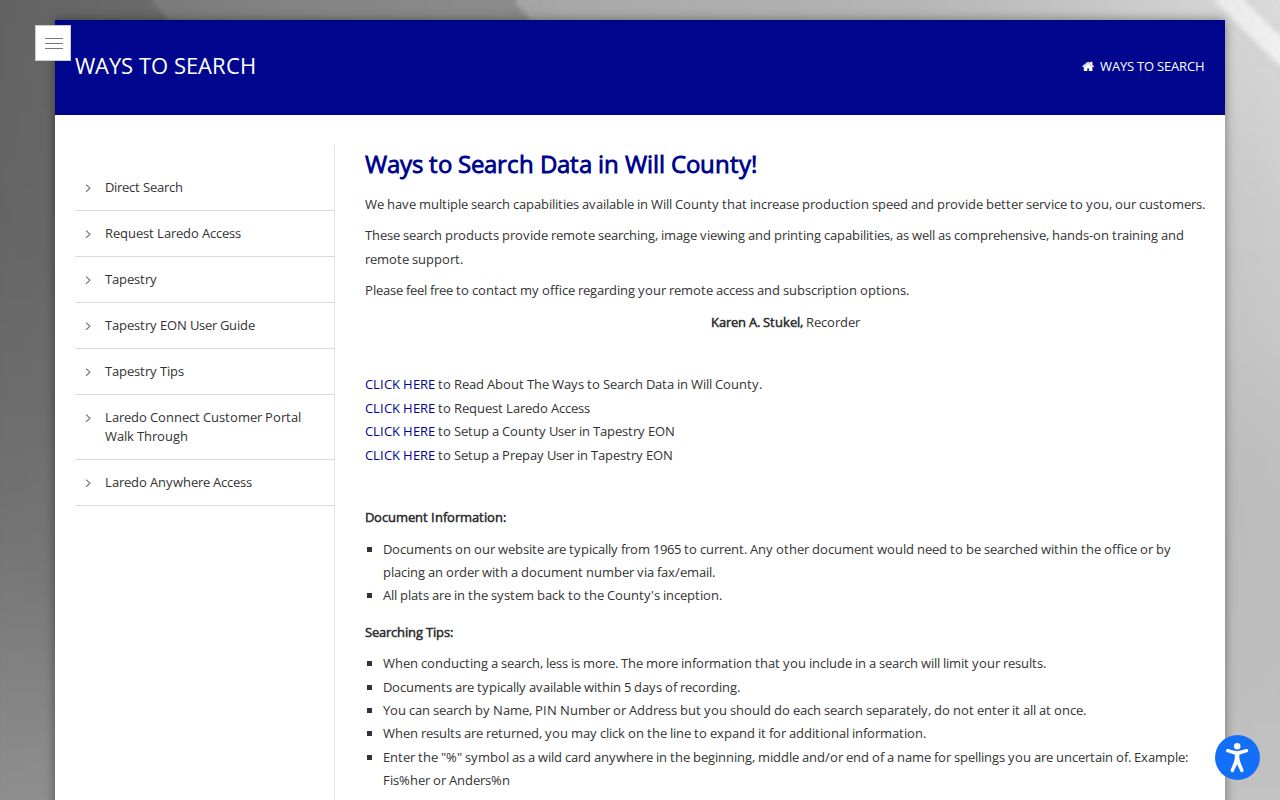
Use the first pass to discover a stable identifier, then carry that document number or PIN into the next pass rather than forcing every clue into one form.
| Search field | How to use it | What to save |
|---|---|---|
| Last or business name; first name | Try exact and variant spellings in separate runs; use a percent wildcard when needed | Party spelling and grantor/grantee role |
| Start and end date; document type | Narrow one ownership period without assuming the instrument type | Recording date and instrument label |
| House number, street, city, ZIP | Omit the street suffix and keep this search apart from name and PIN | Address format accepted by the index |
| PIN or parcel criteria | Use the parcel key; the tips allow dropping four trailing zeros for a broader match | PIN, legal description, and document number |
The index is a locator, not the legal instrument itself. Capture the document number and inspect the image or request a copy before treating a transfer as part of the chain.
Crest Hill Previous Residents in Recorder Archives
The Recorder Archives and Copies page shows the route beyond the online cutoff.
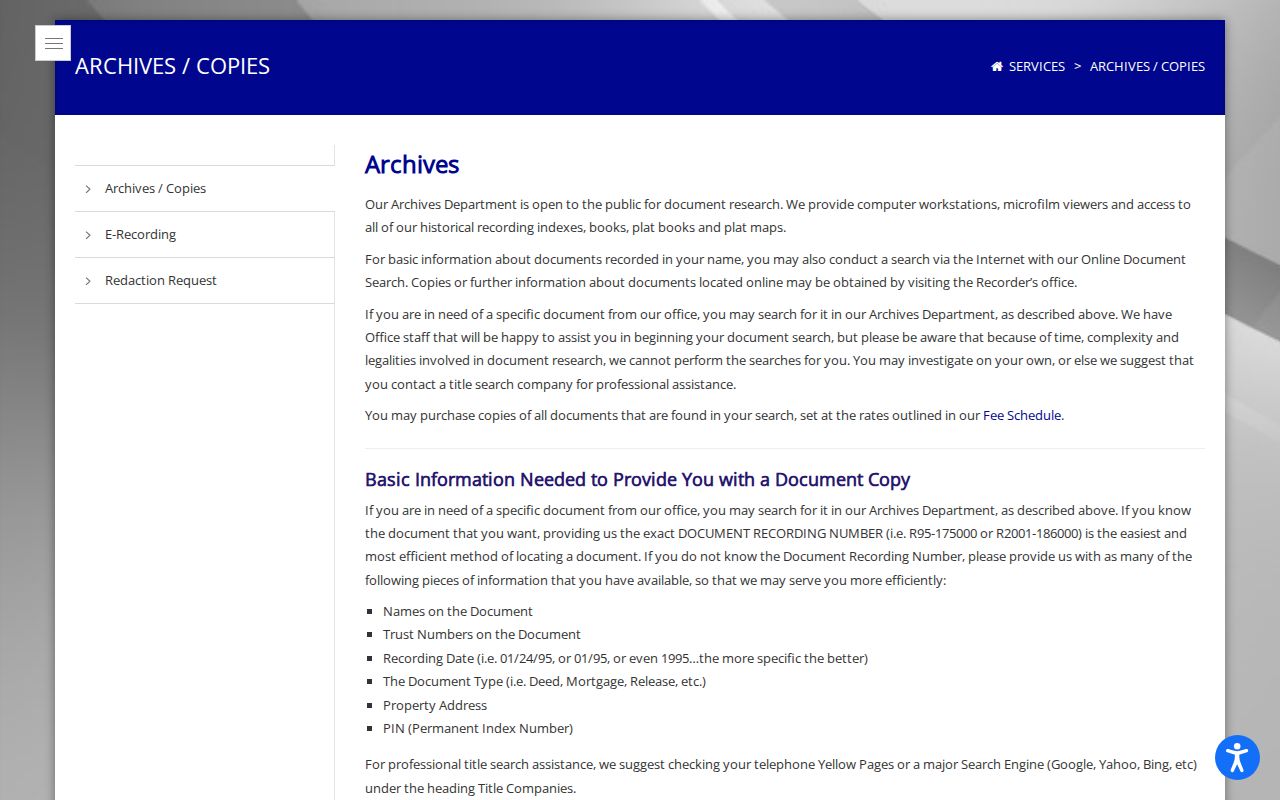
Public workstations, microfilm viewers, historical recording indexes and books, plat books, and plat maps are available there. Staff can help a visitor begin, but they do not conduct the search. The posted copy prices on that page are dated, so confirm current charges before ordering.
Walk Crest Hill Previous Residents Deed Records Backward
A deed chain follows legal transfers, not every person who occupied the place. Start with the current parcel in the Will County assessor portal, but treat its owner field as an assessment index. Then use the PIN and legal description to locate the latest recorded purchase and work backward through named parties.
- Find the address in the assessor portal and record its PIN, municipality, and parcel description.
- Search that PIN by itself in Recorder DirectSearch and identify the current acquisition instrument.
- Record the seller, then search that party as a prior grantee to locate the preceding purchase.
- Repeat while saving each document number, recording date, instrument type, and party role.
- When the web index ends or the legal description changes, continue through Recorder Archives, plats, books, or microfilm.
- Grantor and grantee
- The grantor transfers an interest; the grantee receives it. The roles reverse as the search moves to an earlier sale.
- Chain of title
- The ordered sequence of recorded transfers tied to the same parcel or legal description.
- Legal description
- The recorded land description that can remain stable when a street label, number, subdivision reference, or postal line changes.
WCPHH Connects Early Crest Hill Land and Obituary Clues
The Will County: Preserving History's Heritage database joins several older record types in one search.
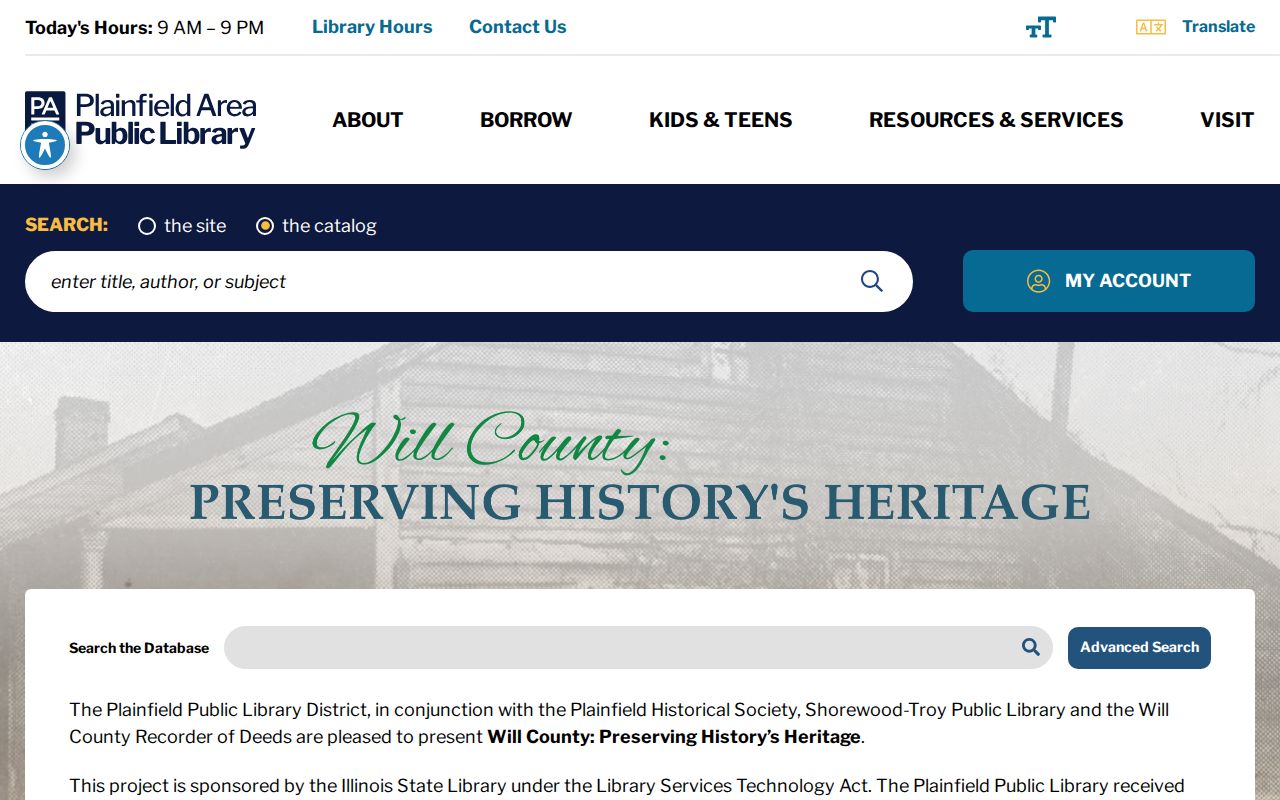
Its fields include first, last, and maiden name, date of death, publication-year range, location, record type, and an attachments-only filter. The record choices include the 1835 to 1885 Will County grantor/grantee index, the Plainfield Enterprise obituary database from 1893, and cemetery material from 1836 to 2000. A grantor/grantee result can show transaction type, volume, page, county, city, and state. That schema helps route the next request, but it still does not prove that a named owner lived at the address.
Three Library Routes to Crest Hill Previous Residents
Crest Hill sits within overlapping historical collections, so a failed catalog search should become a reference question, not the end of the trail.
White Oak Library
The Crest Hill Branch holds the in-library Lidice and Local History Reference collections. Nearby Lockport holdings include early city and telephone directories plus later Joliet and Polk runs.
Joliet Public Library
The Ottawa Street Local History Room lists city directories from 1875, telephone directories from 1908, atlases, yearbooks, obituary indexes, and newspapers on microfilm from 1846.
Plainfield Area Public Library
Local books, maps, photographs, family papers, and WCPHH support searches involving Plainfield Township and surrounding Crest Hill places.
Give staff a year or range, the full address, older locality spellings, a surname, and the source already checked. Joliet staff can search microfilm for an obituary, marriage, or birth announcement when supplied a month and year, and its page states that microfilm copies are free.
Lidice Turns a Crest Hill Place Name into a Record Trail
Crest Hill's local history provides an unusually useful search bridge. The Lidice subdivision was named in memory of the Czechoslovakian village destroyed in 1942, and Lidice joined three other subdivisions when Crest Hill incorporated in 1960. Search the subdivision name, Hosmer Lane, relevant street terms, and memorial references across the White Oak Lidice Collection, city planning material, directories, plats, newspapers, and council records.
This story matters because records made before incorporation may not carry the modern city label. A directory entry under Joliet or Lockport Township can still relate to the same later Crest Hill place, but the parcel or plat must make that connection. The Lidice trail is an interest layer, not permission to attach a historic event to an individual household without evidence.
IRAD and Regional Maps Fill Crest Hill History Gaps
The Illinois State Archives IRAD guide lists Will County probate, court, tax, birth, death, marriage, and Plainfield Village records at the Northern Illinois University depository. Those groups can extend a previous-resident inquiry when an estate, tax entry, or legal event explains a break in the deed or directory trail.
No Crest Hill-specific digitized Sanborn sheet was verified. Regional Joliet and Lockport Sanborn holdings can supply building and land-use context for nearby historic settlements, but they should be labeled as regional maps rather than silently treated as a Crest Hill parcel map. For a holdings gap, contact IRAD, the Recorder Archives, the relevant library, or the Will County Historical Society and ask for a narrow check by record type, place, and date.
Pair Crest Hill Previous Residents with Household Sources
Owners are only one layer. A directory may place a named household at an address in its publication year, while an obituary or cemetery record may explain when that person left the record trail. Exact reverse or criss-cross directory coverage for Crest Hill was not verified online, so ask Joliet or White Oak staff whether a volume has an address index before assuming it can be searched by house number. The collections themselves are described on the Crest Hill city directory page.
- Write the address exactly as it appeared in the deed, map, or directory year being tested.
- Search that year's directory by surname, street term, locality variant, and printed abbreviations.
- Place the dated entry beside the nearest available census or other household record, without assuming uninterrupted occupancy.
- Use Joliet newspaper microfilm, WCPHH obituaries, cemetery data, probate groups, and Recorder instruments to test changes.
- Mark every unsearched year as a gap rather than filling it with the prior household.
The 1912 Polk volume is full-view online, while the 1938 metadata says that edition includes Crest Hill, Lockport Township, and Rockdale but has scan-access constraints. Onsite shelves are the fallback for years or address indexes that cannot be searched online.
Lawful use. Research previous residents for house history, genealogy, estate work, or personal curiosity. Never use an old address trail to track, harass, or harm a living person.